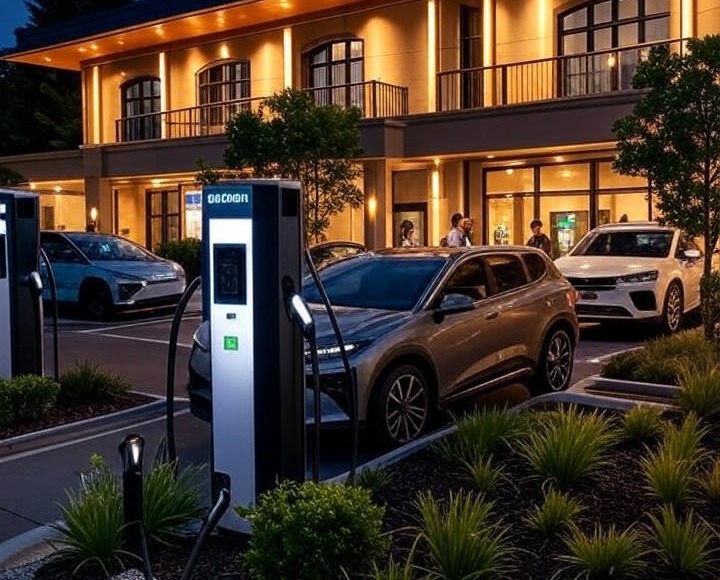
If you’re in the hotel or hospitality business, offering EV charging isn’t just a perk—it’s fast becoming a baseline expectation. Electric vehicle (EV) adoption is accelerating; in the U.S., plug-in sales nearly doubled from 2020 to 2021, according to the Department of Energy. Today’s EV-driving travelers look for properties where they can recharge both themselves and their cars—don’t let missing chargers turn potential guests away.
Why EV Charging Is Essential for Hospitality Properties
The rise of electric vehicles (EVs) has brought new expectations from travelers—especially those booking hotels, resorts, and vacation rentals. Just as Wi-Fi transformed from a luxury amenity into a non-negotiable standard, EV charging is now becoming a must-have for properties looking to stay competitive. Here's why your hospitality business should plug into this shift:
1. Meet Modern Guest Expectations
Today’s travelers aren’t just searching for comfort—they’re searching for convenience. According to the U.S. Department of Energy’s Alternative Fuels Data Center, EV ownership continues to grow, and drivers are actively seeking destinations with accessible charging. If your property doesn’t provide EV charging, you may be missing out on bookings—especially from EV-driving guests who plan trips around where they can plug in.
As more car rental companies and ride-share fleets go electric, even non-EV-owning guests may expect the option. Forward-thinking properties that offer EV charging are already seeing a reputational boost as sustainability-conscious destinations.
2. Offer Overnight Charging Convenience
Level 2 chargers—which use a 240-volt outlet—are ideal for hospitality environments. Unlike Level 1 chargers (which provide just 3–5 miles of range per hour), Level 2 chargers can deliver 20–45 miles of range per hour. That means guests staying just one night can leave the next morning with a fully charged vehicle—without needing a high-speed DC fast charger, which is typically unnecessary for overnight use.
Whether your guests are business travelers or vacationers, on-site Level 2 charging allows them to power up while they sleep—providing convenience and peace of mind without disrupting their plans.
3. Generate Passive Income Through Charging Access
Installing EV chargers isn’t just a service to guests—it’s also an opportunity for revenue. Many properties use charging stations with built-in payment systems, allowing them to charge per use, per kWh, or per session. By doing so, you create a passive income stream that helps offset installation and maintenance costs.
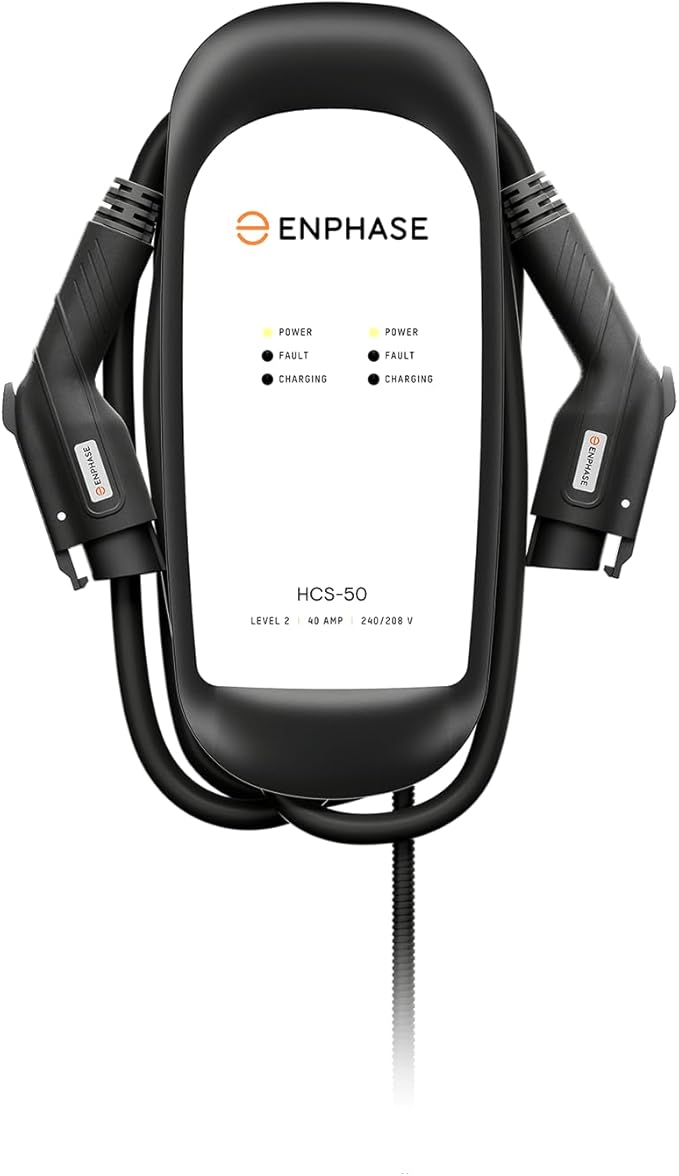
One excellent solution for this is the Enphase HCS-D50 Dual EV Charger (40 Amps). This commercial-grade charger supports paid access and can be configured to align with your pricing model—whether you're offering charging as a complimentary amenity or monetizing usage during peak hours.
Featured Charger: Enphase HCS-D50 Dual EV Charger (40 Amps)
If you’re looking to install EV charging for multiple guests, the Enphase HCS-D50 Dual EV Charger is a powerful and efficient solution built specifically for commercial environments like hotels and resorts.
Key features:
- Dual Charging Ports: Accommodate two EVs at the same time with a single unit.
- Built-In Load Sharing: Automatically balances power between both charging outputs, maximizing efficiency without overloading your electrical infrastructure.
- No Major Electrical Overhaul Needed: Reduces installation complexity and cost by eliminating the need for additional circuits or service upgrades.
- Durable & Weather-Resistant: Designed for outdoor use with a NEMA 4 enclosure, making it suitable for all climates and year-round operation.
- Supports Payment Systems: Configure it for guest-only access, time-of-use pricing, or public availability.
Installing a robust charger like the Enphase HCS-D50 not only ensures you’re meeting the demands of today’s EV-driving guests—it also helps you future-proof your property as electric mobility becomes the norm.
Sustainability & Brand Image: Why EV Charging Sets Your Property Apart
In today’s hospitality landscape, sustainability is no longer a secondary concern — it’s a key driver of guest decisions. Travelers, especially Millennials and Gen Z, are increasingly choosing hotels, resorts, and vacation rentals that reflect their environmental values. Offering on-site EV charging is a clear, visible way to show your commitment to green practices — and it can have a powerful effect on your brand image.
Strengthen Your Sustainability Credentials
By installing EV chargers, your property actively contributes to the reduction of greenhouse gas emissions by encouraging clean transportation. According to the National Oceanic and Atmospheric Administration (NOAA), climate change continues to accelerate, and more consumers are aligning their spending with environmentally responsible businesses. Providing EV charging helps position your property as part of the solution.
In fact, EV infrastructure is increasingly recognized as an essential component of sustainable building and hospitality design. It complements other initiatives like energy-efficient lighting, solar panels, water conservation systems, and recycling programs — all of which contribute to achieving certifications like LEED or Green Key.
Build Trust with Modern, Eco-Conscious Guests
A survey from Booking.com revealed that 76% of travelers want to travel more sustainably, and over half say they actively look for sustainability-related information when booking accommodations. Younger travelers, in particular, are brand-loyal to businesses that reflect their values — and they’re quick to share their experiences on social media and review platforms.
Installing EV charging sends a powerful message to current and future guests:
- You care about the planet.
- You support the shift to cleaner transportation.
- You're invested in modern infrastructure that meets evolving needs.
In short, it shows your brand is forward-thinking, responsible, and attuned to what matters most to your guests.
Stand Out in a Competitive Market
As EV adoption continues to rise, hospitality properties with visible green amenities — like on-site EV chargers — stand out on booking platforms, travel apps, and EV-friendly maps such as PlugShare or the Department of Energy’s Alternative Fuels Station Locator. These platforms are increasingly used by EV drivers to plan trips, and listing your property can help you tap into an entirely new audience of eco-conscious travelers.
Scale Easily with Load Management
As demand for electric vehicle (EV) charging grows, especially at hotels, resorts, and other hospitality properties, many owners are looking to install more than one charger. But the concern often arises: Will our existing electrical infrastructure be able to support multiple units without a complete overhaul?
Thanks to advanced load management capabilities, the answer is often yes — and without the need for expensive panel upgrades or rewiring.
What Is Load Management?
Load management is a smart charging feature that allows multiple EV chargers to share the same electrical circuit or panel efficiently. Instead of each charger drawing full power independently — which could overload your system — smart chargers dynamically distribute available amperage between connected vehicles. This lets you scale your EV charging setup while avoiding major electrical renovations.
There are two primary types of load management:
- Concurrent charging: Multiple vehicles charge at the same time, with the system intelligently splitting available power between them.
- Rotational charging: Vehicles charge one after the other based on a set schedule or priority system, ensuring that each gets enough energy without exceeding the panel's capacity.
How It Benefits Hospitality Properties
This kind of setup is especially valuable for hospitality businesses where guest turnover is frequent, and charging demand can vary by the hour. Load-managed chargers ensure that each vehicle gets a fair share of power — whether it's an overnight guest topping off their battery or a restaurant diner charging for a few hours.
With features like app-based scheduling, remote monitoring, and user prioritization, property owners have complete control over how energy is distributed. That means you can customize the system to fit your guests' needs and your facility’s limits.
Simplify Installation and Reduce Costs
Instead of installing a dedicated circuit for each EV charger — a process that can involve trenching, panel upgrades, or utility coordination — load-managed systems reduce that burden. You can connect multiple chargers to a single circuit or subpanel and let the system handle the rest.
A prime example is the Enphase HCS-D50 Dual EV Charger (40 Amps). This commercial-grade unit features dual ports with built-in load sharing, allowing two vehicles to charge simultaneously from one station. It eliminates the need for complex configurations, making it an ideal choice for hotels and hospitality environments seeking a plug-and-play solution that scales.
Other models with intelligent load management are also available, many of which offer integration with building energy systems and utility demand-response programs.
Future-Proof Your Infrastructure
Even if your initial setup includes only two chargers, load management makes it easier to expand in the future. As EV adoption accelerates, having scalable infrastructure means you won’t need to reinvest in foundational systems — just add new chargers as needed.
Funding and Incentives for EV Charging Installations
While installing EV charging stations may seem like a major investment, there’s good news for hospitality property owners: a wide range of financial incentives are available to significantly reduce your upfront costs. From federal tax credits to local utility rebates, these programs are designed to encourage the growth of EV infrastructure—and your business can benefit.
Federal Tax Incentives
At the federal level, one of the most important resources is the Alternative Fuel Vehicle Refueling Property Credit, also known as IRS Form 8911. This tax credit is available to commercial property owners and covers up to 30% of the total cost of EV charging equipment and installation, capped at $100,000 per project.
To qualify, chargers must be installed at a business location and remain in service for at least five years. This makes it an ideal opportunity for hotels, resorts, and other hospitality venues looking to improve guest amenities while lowering installation expenses.
For full eligibility requirements and application instructions, visit the IRS official Form 8911 page and review the U.S. Department of Energy’s summary of the tax credit.
State and Local Rebates
In addition to federal tax incentives, many states offer EV infrastructure grants, rebates, or credits. These may include:
- Rebates on the cost of charging equipment
- Installation subsidies for labor and wiring
- Additional tax credits at the state level
- Grants for multi-port or publicly accessible installations
For example, California’s CALeVIP program has provided millions in EV infrastructure funding, while New York’s Charge Ready NY program offers up to $4,000 per charging port.
You can search for programs in your area using the U.S. Department of Energy’s Laws and Incentives database. Filter by your state to see what incentives are currently available to commercial property owners.
Utility Company Programs
Many utility providers also offer financial support, installation assistance, or ongoing operational incentives to commercial properties that install EV chargers. These programs vary by region but may include:
- Rebates on equipment or installation costs
- Free or subsidized electrical upgrades
- Time-of-use (TOU) rate plans for lower energy costs during off-peak hours
- Demand response or load management incentives
Some utilities even offer turnkey programs that include site assessment, equipment recommendations, and rebate processing—making the process easier and more affordable.
Check with your local utility provider or visit the DSIRE database (Database of State Incentives for Renewables & Efficiency) for up-to-date details on utility-sponsored EVSE programs.
Make the Most of Available Resources
Installing EV chargers doesn’t have to be a financial burden. With strategic use of federal tax credits, state programs, and utility incentives, hospitality businesses can offset a substantial portion of their project costs. And because many of these incentives are time-limited or tied to funding availability, acting sooner rather than later can maximize your return on investment.
Pro Tip: If you're installing a scalable system like the Enphase HCS-D50 Dual EV Charger (40 Amps), be sure to include labor, hardware, and network fees in your total cost when calculating eligible incentives. That way, you'll get the most accurate savings estimate when applying.
The Bottom Line
Installing EV charging stations on your hospitality property isn’t just a checkbox—it’s a strategic investment in guest satisfaction, sustainability credentials, and future-readiness. With the Enphase HCS‑D50 Dual EV Charger, you can serve today’s EV travelers while preparing for tomorrow’s demand—all with smart, scalable solutions that add value to your property. Don’t wait until the competition does—charge forward with EV charging now.